
Ergonomic chairs are currently the most popular type. When choosing an ergonomic chair, the key focus should be on its support and adjustment functions in the core areas to ensure it effectively conforms to the body’s curves. This distributes pressure, thereby improving comfort during prolonged sitting and protecting spinal health.
Key Components to Look for When Buying
When purchasing a chair, you should pay close attention to the design and function of the following core components, as they directly determine the chair’s support, comfort, and fit.
1. The key is that the Ergonomic chair back and lumbar spine should fit each other dynamically.
The backrest and lumbar support are the soul of an ergonomic chair. When purchasing a chair, prioritize those with a design that provides zoned support.
Chair back type: Available in single-back and double-back designs. The dual-back adaptive lumbar support can independently conform to the lumbar spine with a larger support area. A single adjustable backrest is more suitable for users who want strong support or have a limited budget.
Lumbar support function: Avoid choosing a fixed lumbar support. Choose a lumbar support that allows for vertical and horizontal adjustment or adapts to changes in sitting posture.
2. Cushion. It balances support and breathability.
The seat cushion directly affects the comfort of the buttocks and blood circulation in the legs.
For material selection, mesh fabric offers the best breathability and is suitable for most people.
Molded cotton is more comfortable than sponge.
3. Headrest and armrests: Improved details enhance the user experience
Although these parts are not core components, they can significantly improve comfort.
Headrest: Its main function is to support the cervical spine. Choose a style that supports up-down movement and adjustable angle, so that the support point is adjusted to the cervical spine rather than the back of the head, thereby effectively relieving neck pressure.
Armrest: It should at least have adjustment functions. Choosing 3D or 4D is the best option.
4. Chassis and safety: Basic safeguards cannot be ignored.
The chassis determines the smoothness of adjustment, stability, and safety as a bottom line.
Chassis: Mid-to-high-end products utilize a dual-spring design, resulting in a smoother cultivation process and a wider angle.
Pneumatic rod. You must choose to pass SGS, BIFMA, and TUV certifications from authoritative certification bodies at levels three or four, which are essential safety standards.
Frame and chair base: Aluminum alloy frames and chair legs are generally superior to nylon or metal in terms of load-bearing capacity and durability. Especially suitable for those with higher body weight or those who have post-aerobic exercise.
How do I determine if the Ergonomic chair is right for me?
After clarifying the product’s functions, the most crucial step is to determine whether the chair’s size matches one’s body type.
Sit height: The seat height of the chair should be lower than or equal to your theoretical seat height. A simple way to judge this is that when you sit down, your feet should be able to rest flat on the ground, and your thighs should be parallel to the ground or slightly tilted downwards. There should be no excessive pressure on the lower part of your thighs.
Overall height: The highest point of the chair should cover the height of your cervical spine to ensure that the headrest effectively supports your neck rather than the back of your head when you lean back.
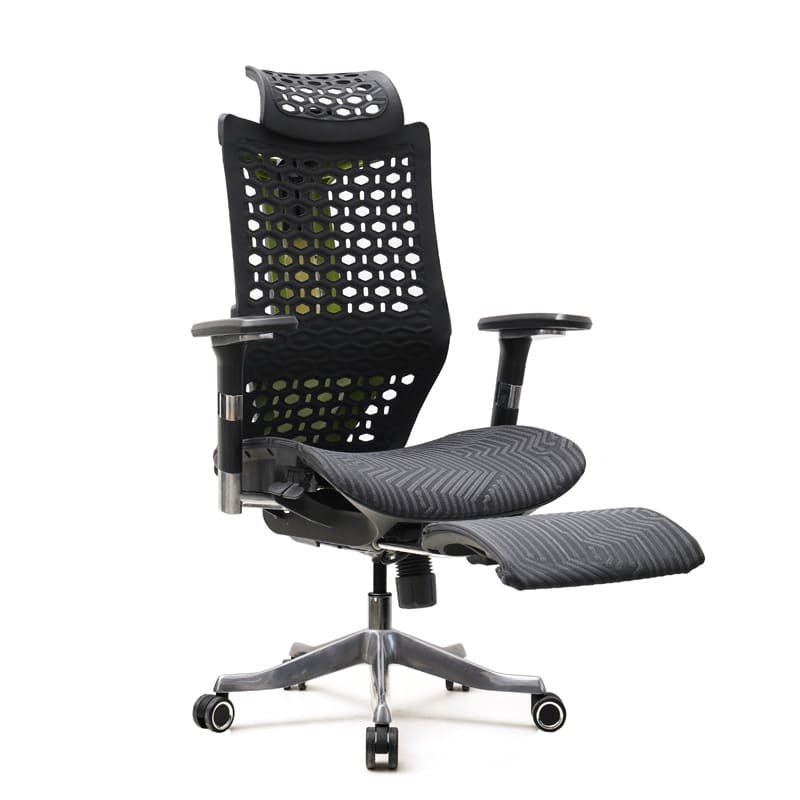
Take our TX-03C ergonomic office chair as a prime example: its standout feature is the innovative silicone backrest, which delivers a game-changing balance of dynamic support and breathability. Unlike traditional mesh or solid backrests, the honeycomb-patterned silicone structure flexes in real time to match your spine’s natural curve, whether you’re sitting upright or leaning back, while the open, perforated design ensures constant air circulation to keep you cool during long work sessions.
Conclusion
When choosing an ergonomic chair, don’t just look at its appearance and price. What truly determines your comfort and back health is lumbar support, seating comfort, and durability.
Whether you’re working, studying, or relaxing by playing games, these chairs offer stable support and a comfortable experience. Remember, a good chair not only protects your back, but also makes sitting for long periods of time easy and enjoyable, allowing you to balance work and life without fatigue.
Once you sit down, you’ll understand that a chair can become your most intimate companion.